
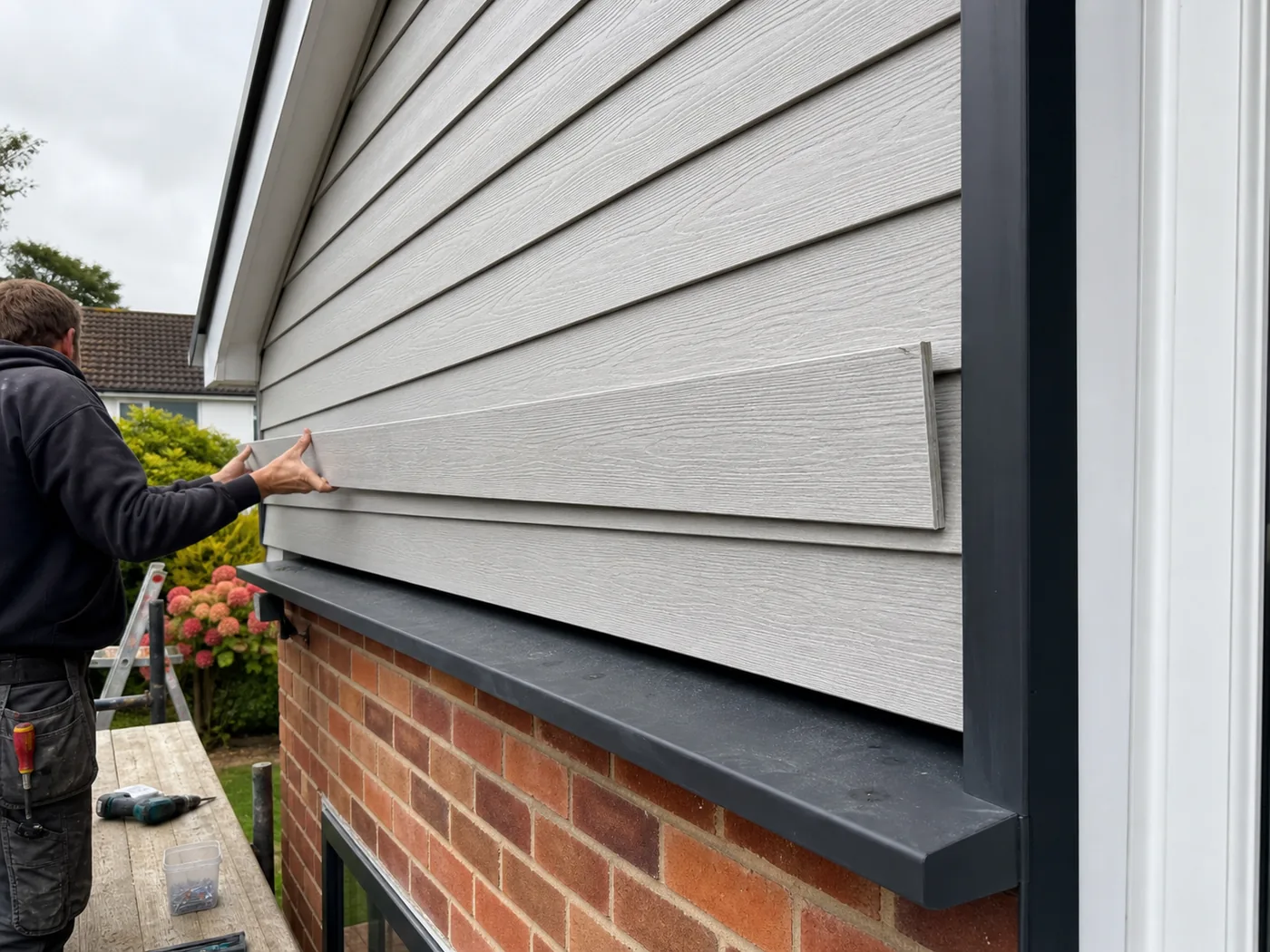
Weathered gable ends
Exposed gables take a lot of wind and rain. Cladding can protect the wall and tidy the look, but the support battens and trims need to be set out properly first.
uPVC and composite cladding
Good cladding changes the look of a home, but the hidden details matter just as much as the boards. We plan the battens, corners, trims and junctions so the finish stays neat.
Start with the problem
Most cladding enquiries start with a tired gable, weathered boarding or an elevation that looks patchy. The answer depends on what is behind the visible surface.
Exposed gables take a lot of wind and rain. Cladding can protect the wall and tidy the look, but the support battens and trims need to be set out properly first.
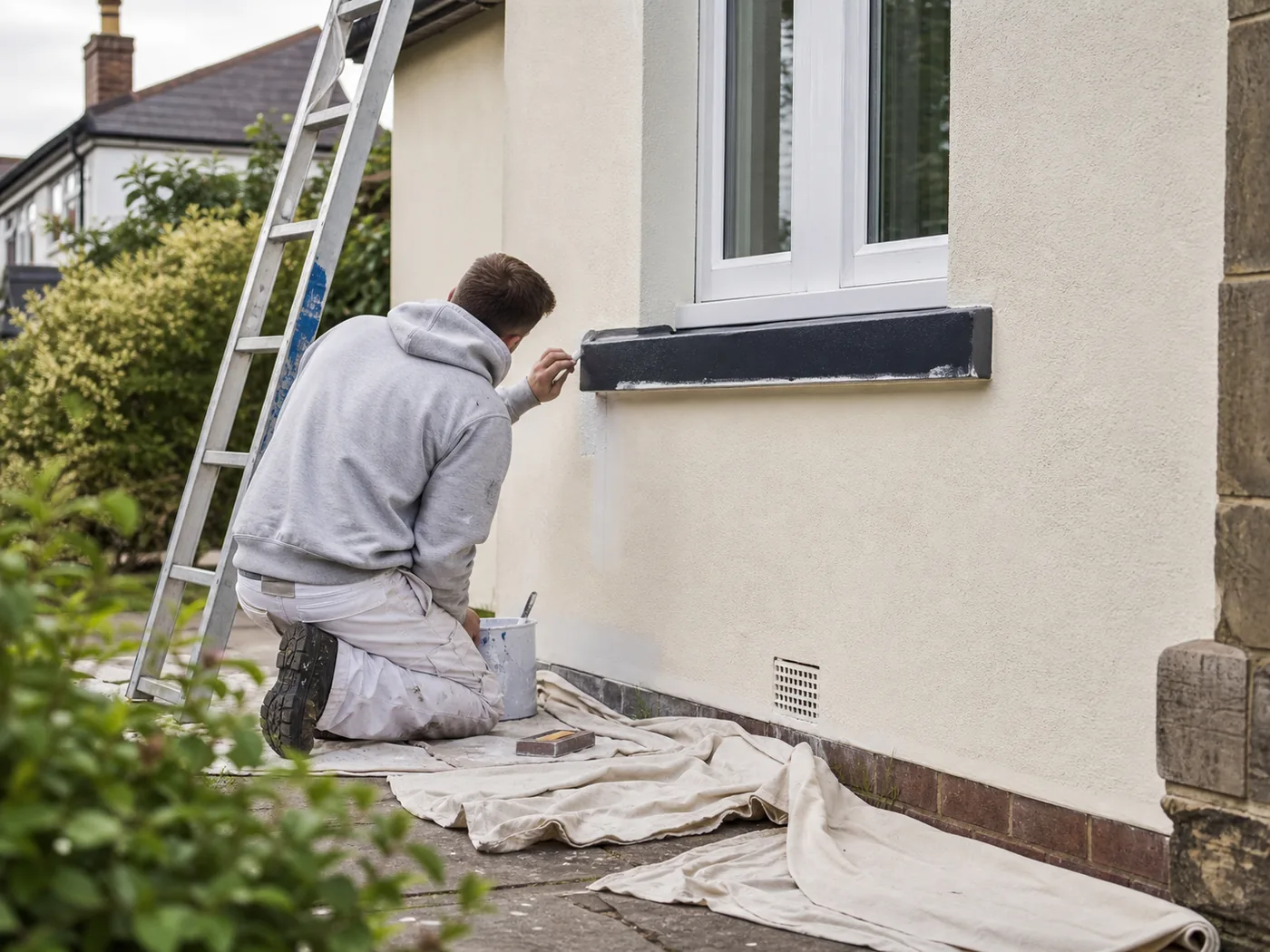
Loose cladding usually means water has found an edge or the fixings have failed. We check why it has moved so the replacement does not repeat the same problem.
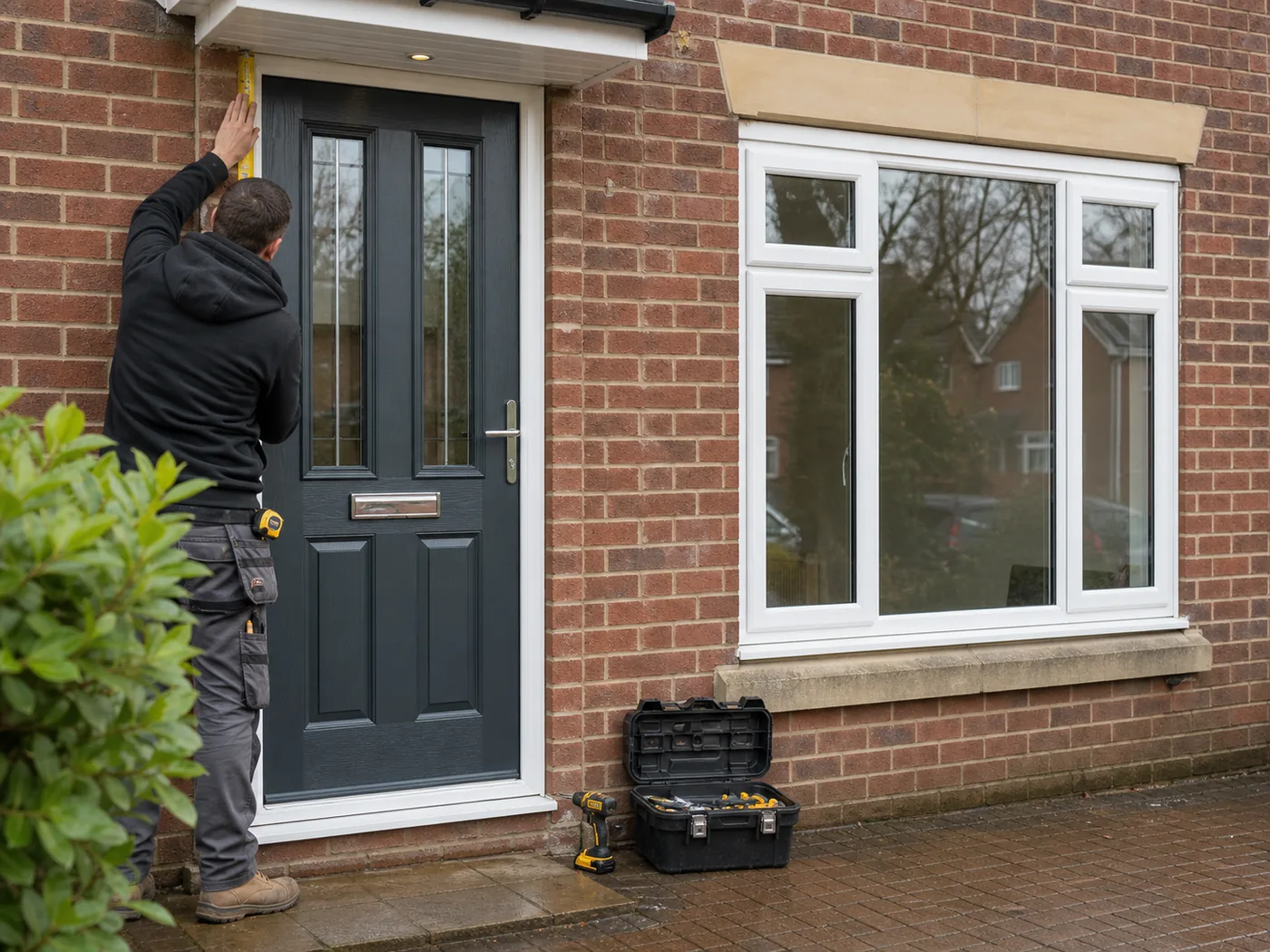
The hardest parts of cladding are often where it meets windows, doors, roofline and corners. Those trims decide whether the finished wall looks crisp or patched together.
Technical detail
Ventilated backingLevel starter trimCorner detailWindow reveal planned
Cladding needs a sound fixing line and the right batten setup. We check the surface, exposure and any existing materials before deciding how to build it up.
A tidy cladding job begins with level starter trims and clean corner details. If those are rushed, every board after them looks slightly wrong.
Windows, doors, roofline and pipes all interrupt a cladded wall. We plan the cuts and trims so water is not encouraged behind the finish.
uPVC and composite have different looks, costs and upkeep. We explain the difference so the cladding suits the house instead of just copying a trend.
Proof of finish
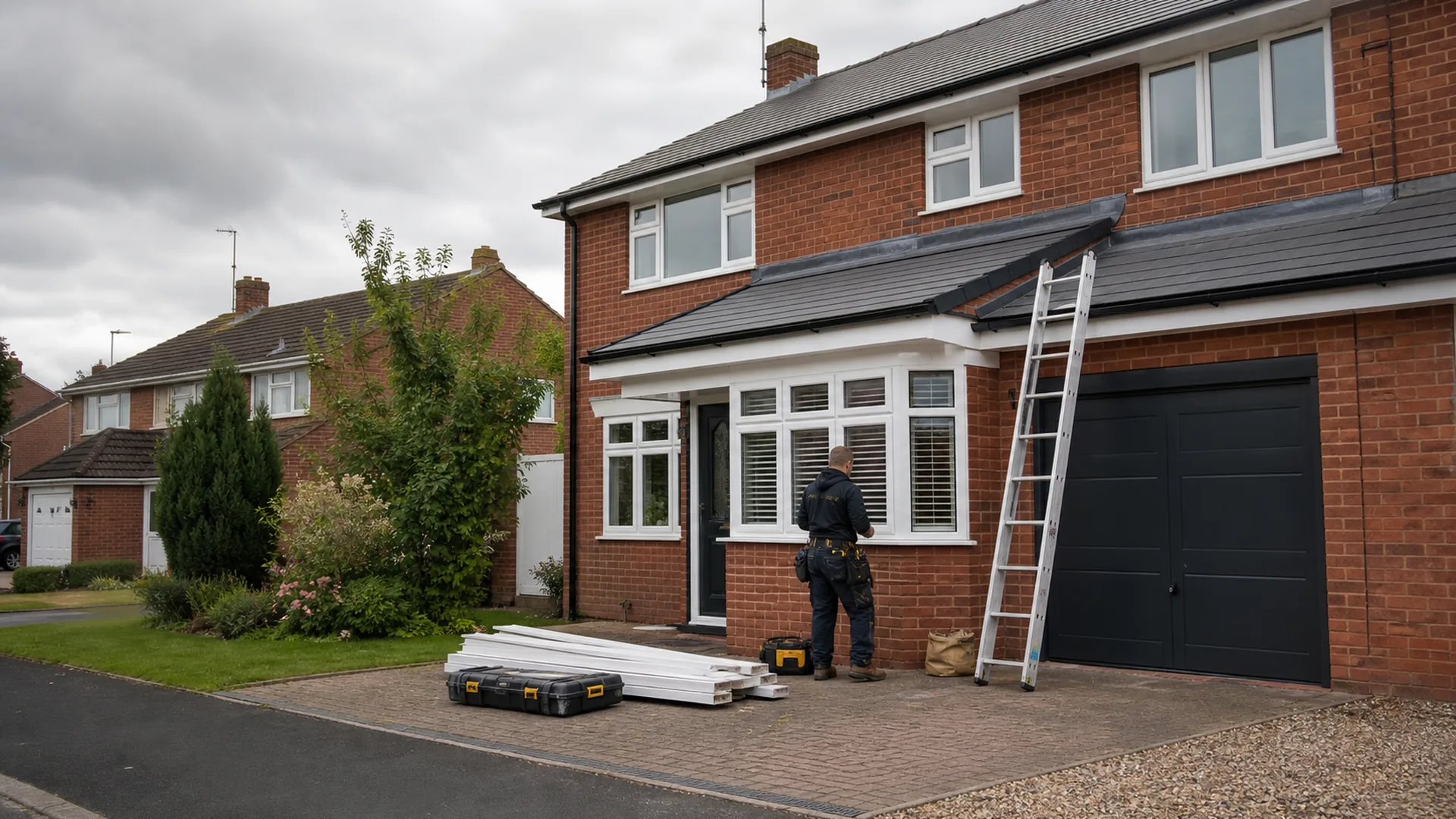
The quality shows in the straight board lines, clean corners, window reveals and the way the cladding meets other exterior work.
How we work
We look at the wall, existing finish, exposure and how it meets windows, doors and roofline.
You get straight advice on uPVC, composite, colour, profile and maintenance.
The backing, starter trims and corners are planned before the boards are fixed.
Edges, reveals and service penetrations are trimmed so the cladding looks built in.
Plain answers
Yes. We talk through the look, upkeep and cost of each so you can choose what suits the house.
Yes. A single gable end, porch or extension can be cladded without needing to change the whole property.
It can, when installed with the correct backing, trims and ventilation. The build-up behind the boards matters.
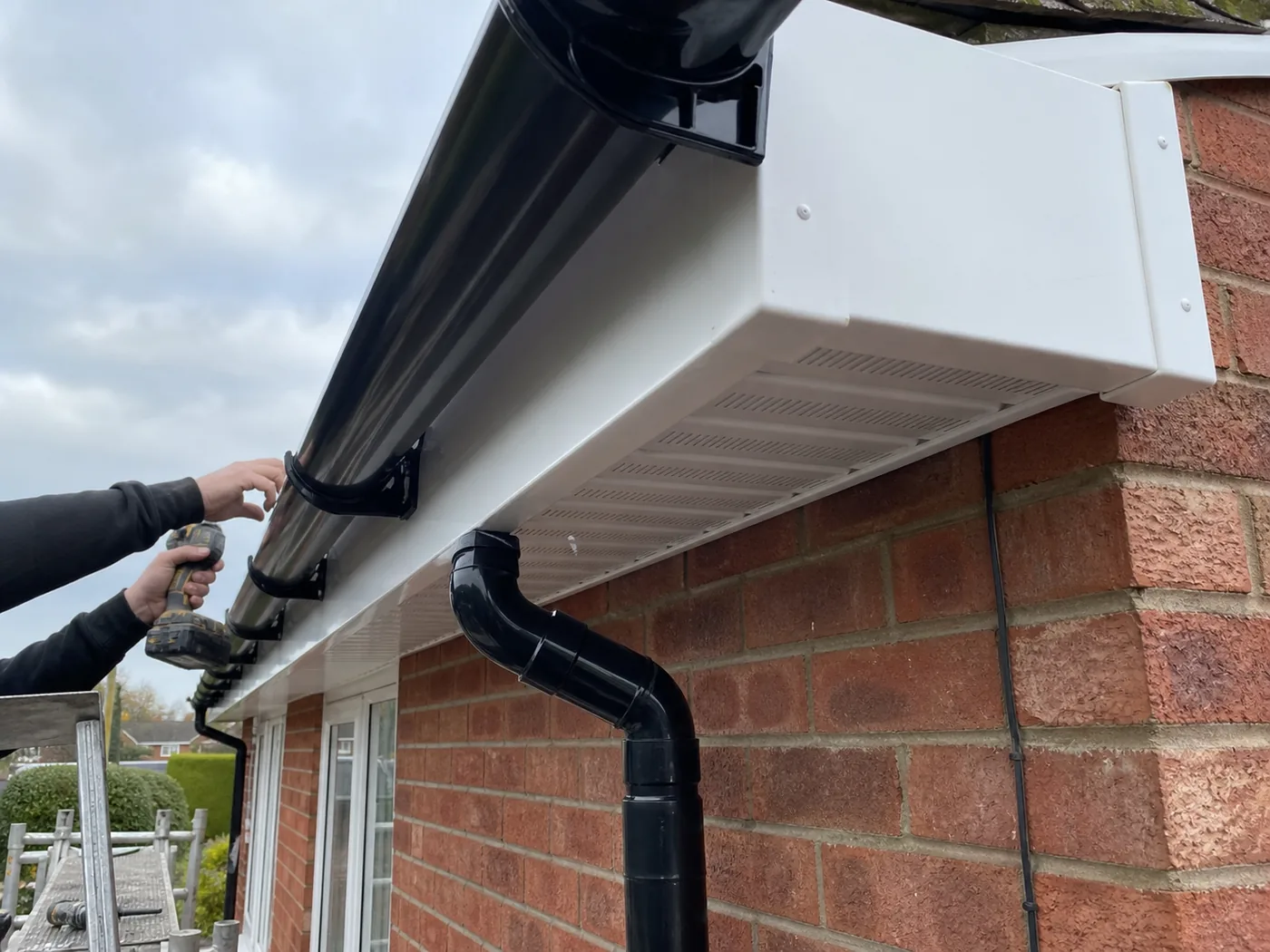
Yes. It often makes sense to coordinate cladding with windows, doors, fascias or gutters so the junctions finish cleanly.
Free, no-obligation quote
Tell us which elevation you are thinking about, what is currently on the wall and whether you prefer uPVC or composite. Photos of the whole wall and close-up corners help.